


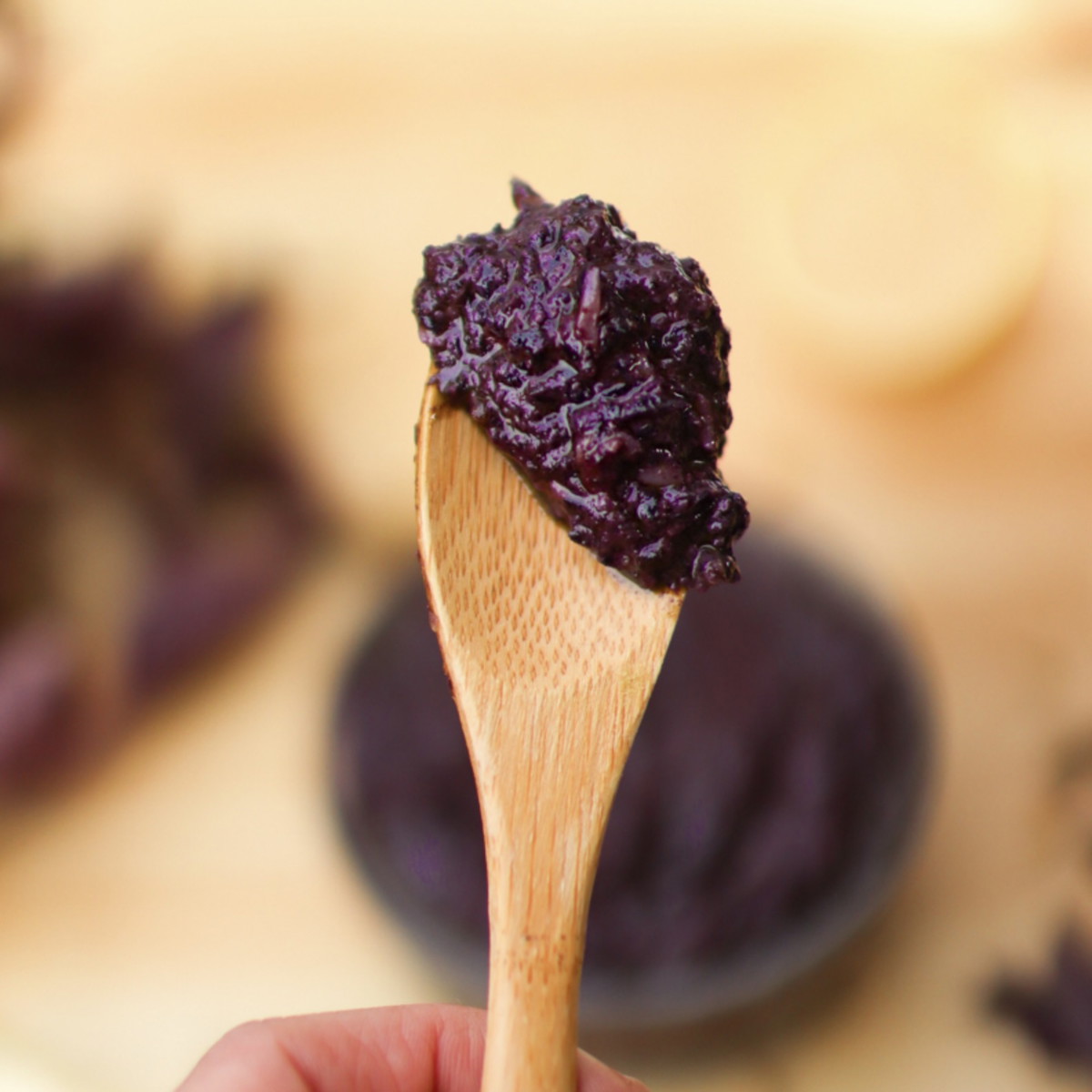
purple basil pesto (that actually stays purple!)
If you've ever grown purple basil, you've probably wondered what to do with it besides admire it. Well, it makes one of the prettiest pestos you'll ever eat. The trick is knowing how to keep that gorgeous deep-purple color from turning muddy brown. One quick step makes all the difference. Toss it with pasta, spread it on sandwiches, swirl it into soups, or freeze it in cubes so summer lasts a little longer.

purple basil pesto (that actually stays purple!)
Marianne Murciano
1 1/2 Cups
20 minutes
5 minutes
315
American
Sauce
💜 The Prettiest Pesto You'll Ever Make
Green pesto gets all the attention, but this gorgeous purple version is the one everyone will ask about. It's rich, garlicky, cheesy, and incredibly fresh—and with one simple trick, it keeps its stunning color instead of turning brown. If you grow purple basil, this recipe is reason enough.
Ingredients
- ⅓ cup pine nuts
- 4 packed cups purple basil leaves (young leaves work best)
- 1 large garlic clove
- ½ cup good-quality extra virgin olive oil, plus a little more if needed
- Juice of 1 fresh lemon
- 1 cup freshly grated Parmigiano-Reggiano
- ½ teaspoon kosher salt, or to taste
Directions
- Toast the pine nuts. Place the pine nuts in a dry skillet over medium heat. Stir frequently until lightly golden and fragrant, about 3–4 minutes. Transfer to a plate to cool.
- Keep the basil purple. Bring a saucepan of water to a boil and prepare a bowl of ice water. Drop the basil leaves into the boiling water for about 30 seconds, then immediately transfer them to the ice bath. Drain well and squeeze out as much water as possible.
- Blend the base. Add the toasted pine nuts and garlic to a mini food processor. Pulse until finely chopped into a coarse paste.
- Add the basil. Add the blanched basil and olive oil. Pulse just until smooth, adding a little more oil if needed. Avoid over-processing—the less heat you create, the brighter the color stays.
- Finish the pesto. Add the Parmesan, lemon juice, and salt. Pulse a few more times until everything is combined.
- Taste and adjust the seasoning. Serve immediately or freeze for later.